


Inside iGaming: Why Math Beats Luck at Every Table
Every gambler remembers their first big win. Very few remember the exact sequence of events that produced it, because there usually wasn't a pattern — just
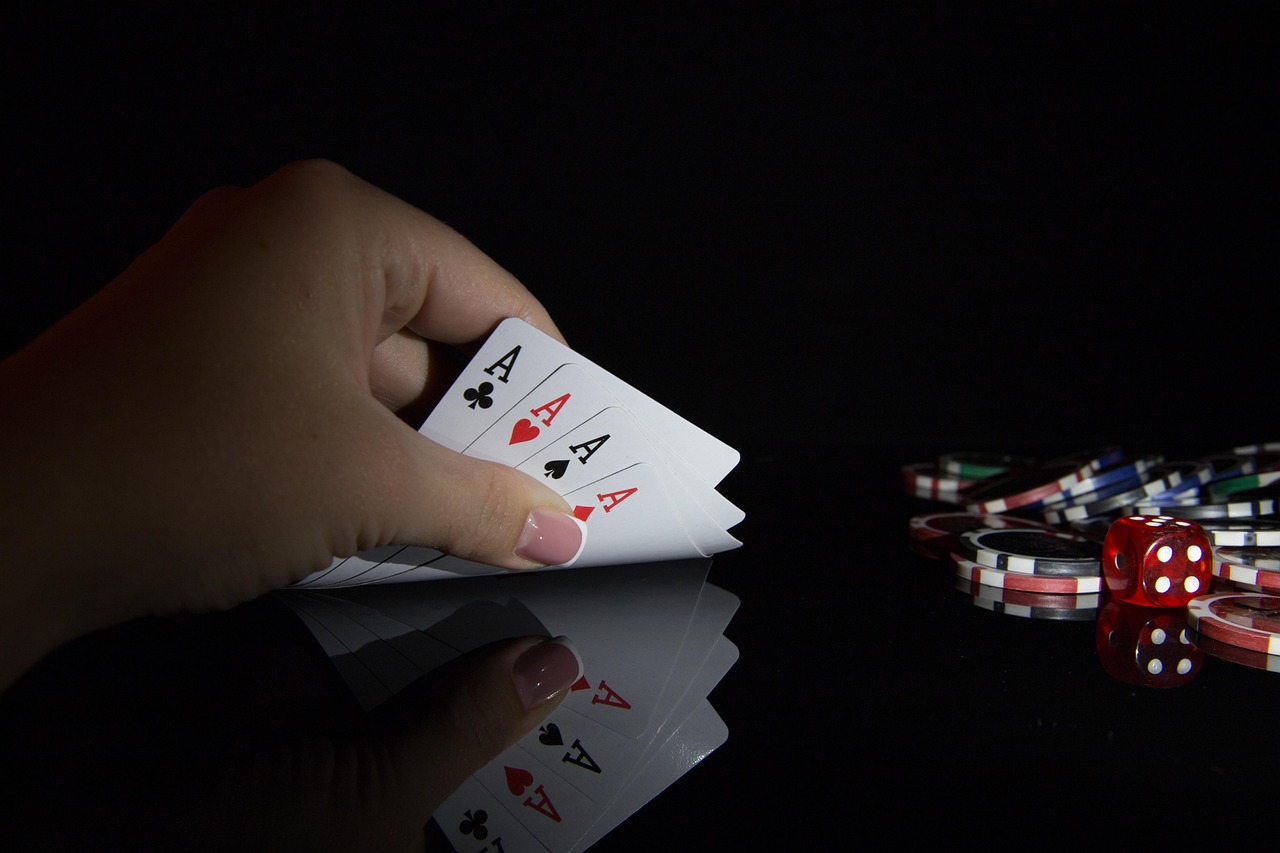
Every gambler remembers their first big win. Very few remember the exact sequence of events that produced it, because there usually wasn't a pattern — just variance doing what variance does. The uncomfortable truth about iGaming is that the house doesn't beat you with tricks. It beats you with arithmetic, slowly and reliably, and most players never bother to understand the machine they're feeding.
That's not a lecture about quitting. It's the opposite. The people who actually enjoy casino games for decades — and occasionally walk away ahead — are the ones who treat them as systems with known properties rather than magical boxes. Here's what separates a curious player from a mark.
Every Game Is Just a Number, and the Number Is Called House Edge
Strip away the neon and the slot reels and every wager in a casino, online or brick-and-mortar, reduces to an expected value. That value is negative for the player in almost every case, and the size of that negativity is the house edge.
Concrete numbers matter here. European roulette with its single zero carries a 2.7% house edge. American roulette, with the extra double zero, jumps to 5.26% — nearly double, for the same game, at the same table, just because of one pocket. A perfect blackjack basic strategy player faces roughly 0.5% depending on the rule set. Baccarat's banker bet sits at about 1.06%, one of the best deals on the floor. Typical slot machines range from 2% to 10%, though the number is buried in the paytable and rarely advertised. See king 88 for a side-by-side comparison.
What does a 5% edge mean in practice? Bet $100 per hour at a 5% edge and your theoretical loss is $5 per hour. Bet $1,000 per hour and you're bleeding $50 hourly. Multiply that by a four-hour session and you're looking at real money — not because you played badly, but because the math was always going to grind you down. The house edge is the only number in gambling that never lies.
Slots: Volatility, RTP, and Why Your Favorite Machine Feels Rigged
Slots are the most popular and least understood product in iGaming. Two numbers govern their behavior: return to player (RTP) and volatility.
- RTP is the long-run percentage returned to players. An online slot with 96% RTP theoretically gives back $96 for every $100 wagered. Over millions of spins. Not over your session.
- Volatility describes how that return is distributed. A low-volatility slot pays small amounts frequently. A high-volatility slot, like many Megaways titles, can go hundreds of spins without a meaningful hit and then deliver a 5,000x win.
Here's the trap: RTP says nothing about a specific machine's current mood, and slots have no memory. There is no hot or cold streak in any mathematically meaningful sense — each spin's outcome is independent of the last. That belly-feel certainty that a machine is "due" is the single most expensive misconception in the industry. Independent event probability doesn't care how much you've lost.
If you play slots, play them for entertainment value and pick machines with higher RTP and volatility that matches your bankroll. A 96.5% RTP slot with medium volatility and a $50 budget is a very different animal than a 94% jackpot hunter that eats $50 in twenty spins.
Poker: The One Game Where Skill Actually Shifts the Edge
Poker is the outlier. Unlike roulette or slots, you're not playing against the house. You're playing against other people, and the house just skims a rake. That means skill matters, and it compounds over time.
Two players with identical luck will diverge dramatically over 100,000 hands. Position at the table, bankroll management, hand range selection, bet sizing, and reading opponents — these are learnable skills with measurable effects on win rate, typically expressed in big blinds per 100 hands (bb/100). A strong micro-stakes player might sustain 5 bb/100. A break-even player at the same stakes might be losing 2 bb/100. Over months, that gap becomes a bankroll.
The flip side is that poker punishes ego harder than any other game. Chasing losses at higher stakes after a bad session is the fastest way to erase months of gains. Variance in poker is brutal and can run against you for tens of thousands of hands even if you play perfectly. The players who survive are the ones who accept that truth instead of trying to outrun it.
Bankroll Management: The Skill Nobody Markets
No betting system beats the house edge. Martingale, Fibonacci, D'Alembert — all of them eventually break against table limits and finite bankrolls. But bankroll management genuinely changes your survival rate, and survival is what lets skill matter.
- Decide on a fixed monthly entertainment budget before you deposit. When it's gone, it's gone.
- Size your bets as a small percentage of that budget — for slots, 1-2% of bankroll per spin is a rough rule; for poker cash games, 5% of your bankroll per buy-in is standard.
- Never chase losses with money you can't afford to lose. That instinct is precisely what the house edge is designed to exploit.
- Track your sessions. Players who record wins and losses consistently make far better decisions than those who trust memory, which is reliably wrong.
The Most Dangerous Variable Is the One in Your Head
Modern iGaming platforms are engineered for frictionless play. One tap deposits, autoplay spins hundreds of rounds without input, and live dealer streams create a sense of social presence that makes losses feel abstract. None of this is accidental.
The psychological pull is stronger online than in a physical casino because there's no walk to the ATM, no crowd watching you, no closing time. Chasing losses, betting on tilt, and playing past your intended session length are the three behaviors that convert a controlled hobby into a genuine problem. Set time limits, use deposit caps, and walk away when you feel the pull to double down. The house doesn't need to outplay you — it only needs you to stay one session too long.
Final Thought: Play the Math, Not the Feeling
iGaming isn't inherently rigged, and it isn't a path to easy money for anyone who isn't running a casino. It's a set of games with broadly published odds, a persistent edge against the player, and one notable exception in poker where skill genuinely changes the equation. Every bettor who thrives over the long run — as a hobbyist, not a fantasist — learns the same lesson eventually: know the edge, manage the bankroll, and understand your own wiring better than the games understand theirs. Do that and the losses become predictable, and predictable losses hurt a lot less than the surprise ones.


Post a comment